
For listing agents and sellers deciding whether to furnish an empty house
Should you stage an empty house?
Pros and cons of staging an empty house with furniture and decor only. When a photo helps a buyer read a room, and when the room should stay empty. Checked 2026-11-04.
The decision is the furniture
Furniture and decor are the decision: a sofa, a bed, a rug, and a lamp. Paint, flooring, repairs, and moved walls are building work. A photo leaves a stain, a crack, or a missing fixture in place.
Physical staging puts furniture in the house for the showing. Virtual staging changes the photograph only. The pieces are absent when a buyer walks through.
Reasons to add furniture
Add furniture when the empty photo does not show how the room is used.
- An empty room hides its use. An empty bedroom shows the floor, a window, and a closet. A bed shows where someone would sleep. A living room with a sofa and chairs shows a seating group.
- One arrangement can be tried before any rental. A photo shows a queen bed or a smaller bed on the same walls. A bed that blocks the closet shows up before a truck arrives.
- Two rooms can be enough. The living room and the primary bedroom carry the plan. Kitchens and bathrooms usually explain themselves through the fixtures. Staging every closet adds pieces without adding information.
- The empty original remains. The empty original stays in the file. The staged file is one idea for furniture. The photograph of the house stays the record.
Room order and a budget path are in how to stage an empty house on a budget. The bedroom itself is in how to stage an empty bedroom.
Reasons to leave a room empty
Leave a room empty when the visit needs the empty house, or when the photo already shows the room's use.
- The showing will not match the photo. With only the picture staged, the buyer walks into an empty room. The sofa in the photo is a picture of a sofa. Some buyers want the floor clear so they can imagine their own furniture. An empty photo does that without a second file.
- The fixtures already show the use. A kitchen with a stove, a fridge, and counters has no need for a sofa or a dining set in the work aisle. A bathroom has no need for a bed. Furniture belongs where the use is unclear.
- The scale can be wrong. The empty photo and the staged photo are the comparison. A changed closet door, window, or floor calls for fewer pieces.
- Damage stays visible. An image that patches a wall, replaces a floor, or removes a crack describes a different house. Buyers who visit see the house.
- Rented furniture is a real bill. The figures are in the next section. Without furniture at the showing, that bill is optional. With furniture at the showing, a picture does not replace the delivery.
The virtual option
Virtual staging changes the photograph only. The upload is the empty room. The brief names the pieces and keeps the walls, windows, doors, flooring, and ceiling. It fits a listing photo that shows one way the room could be used, without rented furniture on site.
It is a poor fit when the buyer's visit is the point. Buyers cannot sit on the bed in the staged photograph. It is also a poor fit when the image is meant to renovate the room. The request covers furniture and decor only.
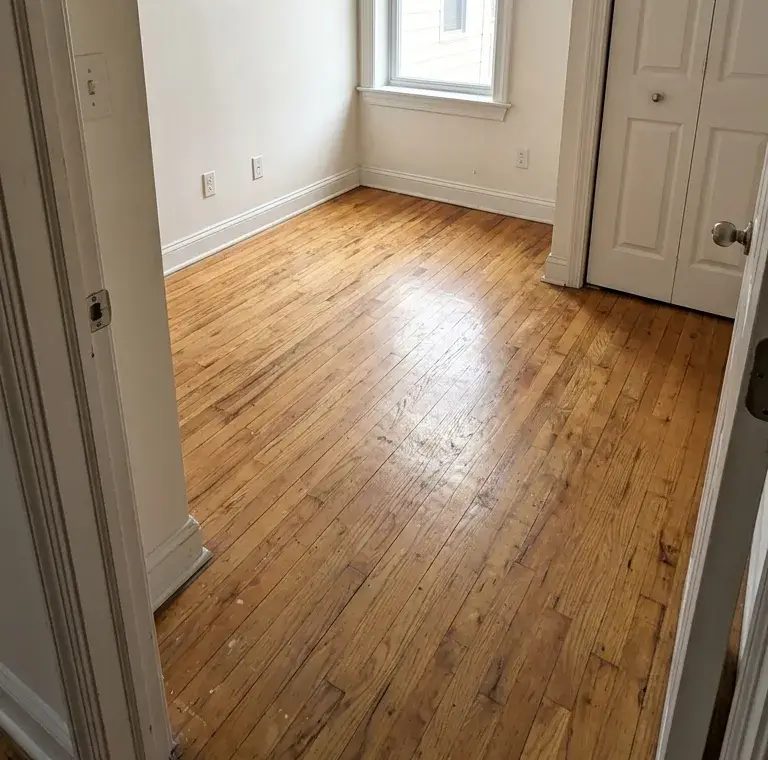
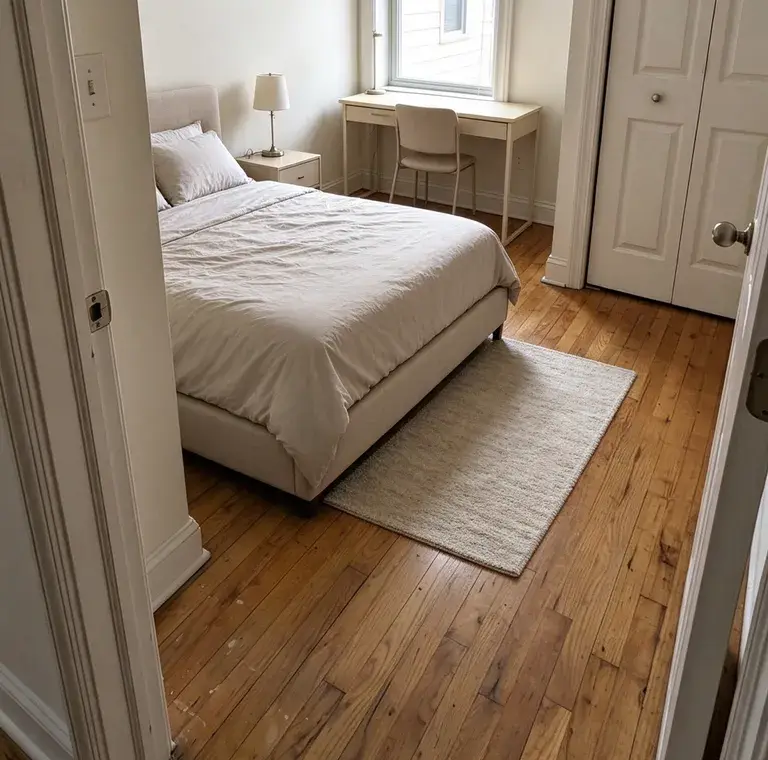
The photos below show this empty bedroom, including the floor. The first file is bare boards. The second adds a bed and a rug in the picture only. The original floorboards remain visible beside the rug. The photo guide and the prompt guide cover the shoot and the wording. For a winter listing, the winter vacant listing staging checklist covers daylight, snow, and decor alongside this decision.
Physical staging is a different purchase
A staging service rents furniture, moves it in, and takes it out. The buyer can walk through the furnished rooms, at the cost of the rental, and the furniture leaves when the term ends.
The National Association of REALTORS® 2025 Profile of Home Staging gives these medians. The median dollar value spent when using a staging service was $1,500, compared to $500 when the sellers’ agent personally staged the home. NAR invited a random sample of members in February 2025 and received 1,266 usable responses. The report does not publish a separate median for vacant homes, so these two figures are not an empty-house quote. Checked 2026-11-04.
RenderVibe’s published prices, also checked 2026-11-04, buy images rather than a furniture rental. A standard single image costs one credit. The Starter pack is US$4 for 5 credits. Agent is $19 USD/month for 40 credits; Studio monthly is $49 USD/month for 120 credits (RenderVibe pricing). A credit and a $1,500 staging-service median are not the same product, and this page does not convert one into the other.
What it costs
Promo for accounts created through Dec 31, 2026, 11:59 PM MT: your one free credit makes one image, and you download it watermark-free at full resolution. After that, buy a credit pack or subscribe to keep creating.
One empty-room photo is one credit for a standard image. Each request shows its credit charge before it runs. Failed generations return their credits. Cancel anytime on a monthly plan. Unused monthly credits expire at the end of the billing period. Pack credits do not expire. Prices above were checked 2026-11-04.
Should I stage every room in an empty house?
No. The living room and the primary bedroom are staged when those photos do not show how the rooms are used. Kitchens, bathrooms, closets, and halls stay as empty photos unless a shot is too bare to read.
Is a staged photo the same as furniture at the showing?
No. Virtual staging changes the photograph. The furniture is absent from the house. Physical staging is the rental that buyers can walk through. Virtual staging is the photo. Physical staging is the furnished visit.
Where do the winter photos fit?
If the empty house will be listed from November through January, the winter vacant listing staging checklist covers daylight, snow, and decor. The furnish-or-not decision is furniture versus an empty room.