
For listing agents and sellers photographing an empty bedroom
How to stage an empty bedroom
How to stage an empty bedroom with a bed, a desk, and a rug. Furniture and decor only. Checked 2026-11-04.
What an empty bedroom photo has to show
An empty bedroom photo has to show where a bed can go. The walls, the window, and the closet are already in the frame, and the use of the room is not. Add a bed and the pieces that belong with a bed. A new floor, new paint, a wider window, or a closet rebuild is a repair. Leave repairs out of the photo request.
The bed in a virtual photo is not in the house at the showing. Physical staging puts a real bed in the room for that visit. Keep the empty original either way, and compare the window, the closet door, and the floor before you publish.
How to stage an empty bedroom
Photograph the empty bedroom, then add a bed.
- Shoot the empty room. Stand in the doorway or a corner. Keep the camera level and on the main lens. Include the floor to the baseboard, the window, and the closet door. Turn the lights on and open the blinds. The photo guide covers framing.
- Choose one use. A bedroom gets a bed. If the room is narrow, a desk can share the window wall. Do not also make it a gym, a nursery, and an office in the same picture.
- Name the pieces and what stays. For example: “Add a bed along the left wall, a nightstand with a lamp, a desk under the window, a chair, and a small rug. Keep the walls, window, closet door, and flooring.” The prompt guide shows how to name what must not move.
- Leave a path. The closet door and the bedroom door both need a clear walk. A bed that covers the closet tells a buyer the closet is blocked.
- Compare the two files. If the window moved, the ceiling changed height, or the closet door disappeared, regenerate with fewer pieces.
The photos below show this empty bedroom, then the same room with a desk under the window and a bed along the left wall. The closet door still opens onto the floor. The room is narrow, so those two pieces share it.
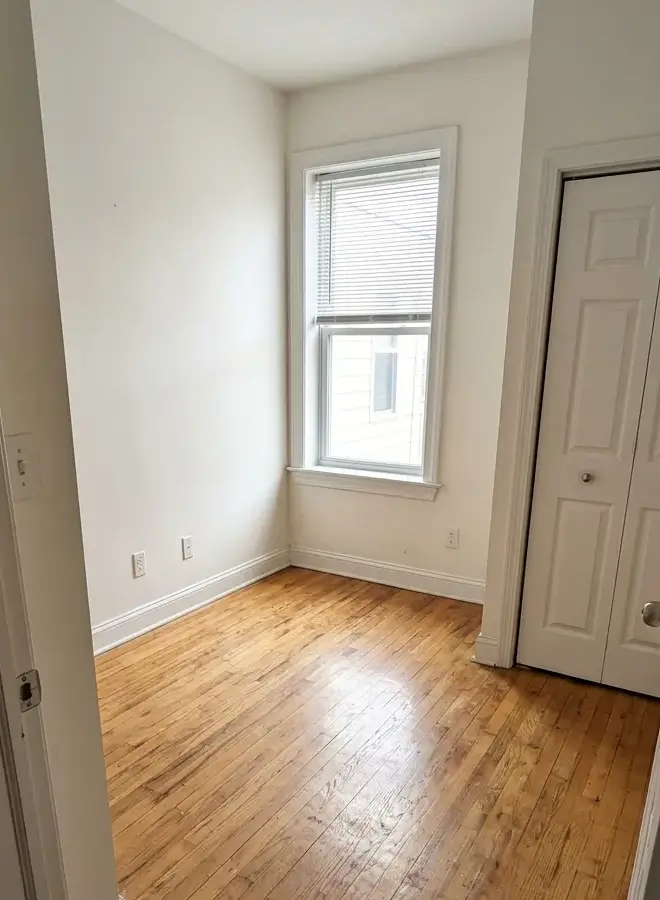
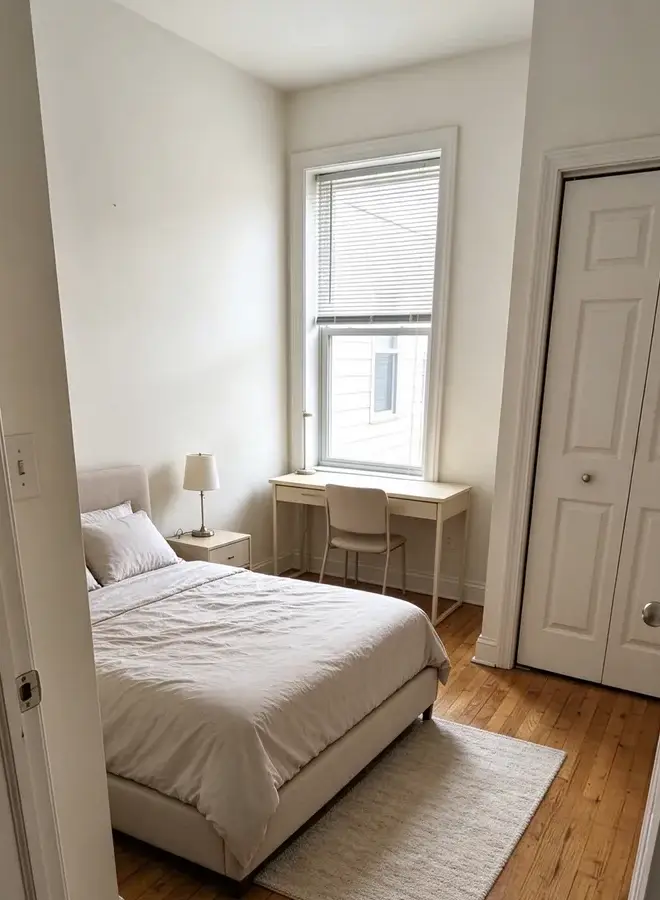
Furniture that belongs in a bedroom
Use a bed, bedding, a nightstand, a lamp, and a rug. A desk and a chair fit when the floor has room for them beside the bed, as in the photo above. Art on the wall is decor. A sofa, a dining table, and bar stools are the wrong pieces for a bedroom, and they make the room read as something else.
Scale is the part to check. A bed that fills the frame from wall to wall may be larger than a bed that would pass the closet. Look at the floor still visible beside the bed and in front of the closet. If that floor vanishes, ask for a smaller bed on the same photo. The small-bedroom staging example walks through the same kind of narrow room.
One photo is enough for most bedrooms. A second angle is useful only when the first frame hides the closet or the window. Do not stage the closet interior unless the closet is the question a buyer will ask.
Keep the room the size it is
Keep the bedroom the size it is in the photo. The staged file is a picture of furniture, not a plan for construction. Do not ask the image to remove a closet, move a window, raise the ceiling, or replace the floor. Those changes would show a bedroom the buyer will not walk into.
If the whole house is empty, stage the living room as well as this bedroom, and leave kitchens and bathrooms as plain photos unless a shot is too bare to read. The order of rooms, and the published cost figures for a staging service, are in how to stage an empty house on a budget. If the listing will be up from November through January, use the winter vacant listing staging checklist for daylight, snow, and decor. That checklist covers daylight, snow, and decor for the season, not a market forecast.
What it costs
Promo for accounts created through Dec 31, 2026, 11:59 PM MT: your one free credit makes one image, and you download it watermark-free at full resolution. After that, buy a credit pack or subscribe to keep creating.
A standard single image costs one credit, so one bedroom photo is one credit. Each request shows its credit charge before it runs. Failed generations return their credits. Credit packs are one-time purchases and pack credits do not expire. The Listing pack is $19 USD for 30 credits. If you stage photos every week, Agent is $19 USD/month for 40 credits; Studio monthly is $49 USD/month for 120 credits. Monthly plans renew until canceled, and unused monthly credits expire at the end of the billing period. Cancel anytime. Checkout shows tax. Checked 2026-11-04 on RenderVibe pricing. The staging cost guide explains how credits are spent.
Can one bedroom photo include both a bed and a desk?
Yes, when the empty photo has floor for both, as in the narrow room above. Put the bed on the long wall and the desk under the window, and keep a path to the closet. If the two pieces collide, drop the desk and keep the bed.
Should the closet stay visible?
Yes. The closet door tells a buyer where the bed can go and whether the door still opens. Frame the empty photo so the closet is in view, and tell the request to keep that door.
What if the rest of the house is empty too?
Stage the primary bedroom and the living room, then stop. Use the budget guide for the other rooms, and the winter checklist when the listing is live in November, December, or January.