Compare RenderVibe credit packs with Virtual Staging AI's published yearly plans. Check what each price includes before you stage a listing photo.
Real RenderVibe before-and-after examples
Reference photos and saved results from RenderVibe tests. These are visual concepts, not photographs of completed work. Briefs below summarize the requests; source credits accompany licensed stock photos.
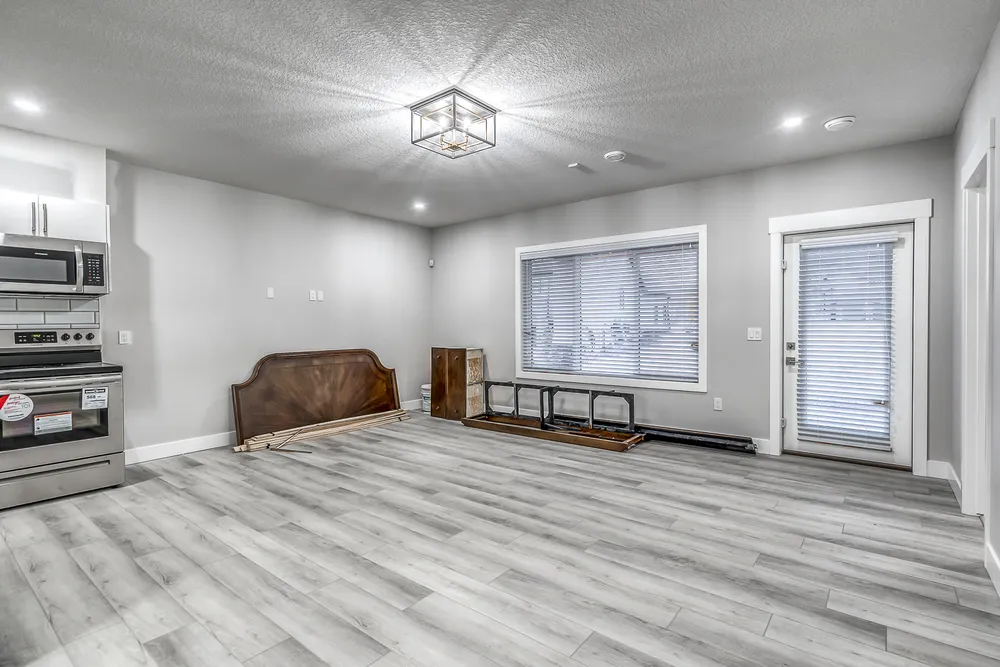
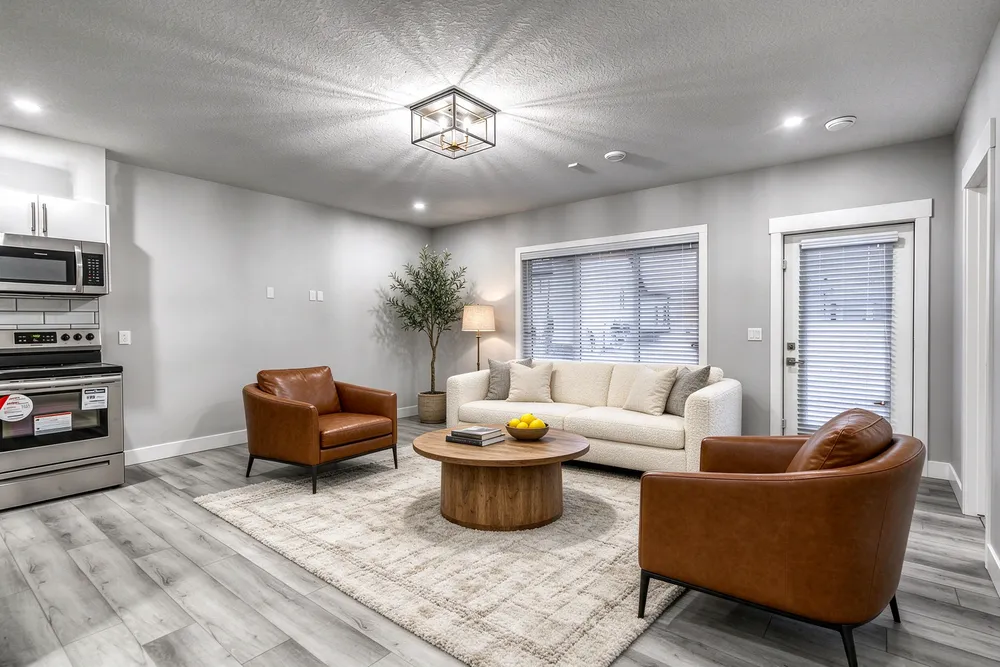
From a cleared room to a living-room concept
Before · source photoAfter · AI-generated concept
The brief: Add a cream sofa, cognac chairs, an oak coffee table and a textured rug. Remove stored furniture pieces and keep the room’s existing finishes.
What to review: The result illustrates a seating arrangement around the existing window and door. Compare the floor, openings and furniture scale with the source before using it.
A new account gets one starter credit for a watermarked preview. The US$4 Starter pack includes five credits and clean downloads. A standard image uses one credit; check your quote for other requests. Compare all credit packs and monthly plans.
Two self-serve tools, different ways to pay
RenderVibe and Virtual Staging AI both let you furnish a listing photo in the browser instead of renting furniture. They are separate companies, and this page is not an endorsement or a partnership. The useful comparison is the commitment you take on before the first acceptable image: a one-time credit pack, or a plan that bills for a year. RenderVibe's Starter pack is US$4 once for five credits. Those pack credits do not expire, there is no subscription, and a standard single image uses one credit after you review the quote. New accounts also get one starter credit for a watermarked preview. Failed generations return their credits. A result you simply dislike is a completed variation, not a failed generation, so another attempt uses the quoted credits. VirtualStaging.AI at virtualstaging.ai is a different product, with different published prices. That comparison is RenderVibe vs VirtualStaging.AI.
What Virtual Staging AI published
On 22 October 2026, virtualstagingai.app/prices showed four plans with a yearly billing presentation labeled up to 50 percent off. Basic was 6 photos a month at US$16 per month, billed as US$192 a year. Standard was 20 photos at US$19 per month, billed as US$228. Professional was 60 photos at US$39 per month, billed as US$468. Enterprise was 150 photos at US$79 per month, billed as US$948. Each listed plan included unlimited renders and downloads, furniture removal, and a stated 10 second turnaround. The page also has a Monthly control. This guide records the yearly-billed amounts that were visible with the plans, not a separate month-to-month price. Confirm the toggle before you buy.
Compare the unit you are buying
A RenderVibe credit is not automatically the same thing as a Virtual Staging AI photo allowance. On RenderVibe, the quote shown before you confirm is the credit charge for that request. Some edits and video cost more than one credit, so five credits are not a promise of five usable listing images. Virtual Staging AI's page prices the plans in photos per month and says renders and downloads are unlimited on those plans. How they count a photo, a regeneration, or a furniture-removal pass was not fully spelled out in the pricing text reviewed for this page. Read their current FAQ before assuming a redo is free. Do not treat either company's advertised speed as a guarantee. RenderVibe does not promise a ten-second result.
Review the picture either way
A lower headline price does not tell you whether the sofa blocks a door or whether a window moved. Keep the original photograph next to the concept. Check openings, ceiling height, floor pattern and built-in features. Say in the listing that the furniture is virtually staged. RenderVibe's living-room example on this page is a saved test concept, not a customer sale and not evidence that every upload will look like it. If you want a person to interpret the brief, a designer-assisted service is a different purchase from either of these self-serve tools. The staging cost guide shows how to divide what you spend by the images you can actually use.
Which commitment fits an occasional listing?
If you stage one vacant home and may not stage another for months, a one-time pack avoids a renewal. RenderVibe also offers Agent monthly at US$19 for 40 credits and Studio monthly at US$49 for 120 credits. Those renew until you cancel, and unused monthly credits expire at the end of the billing period. Virtual Staging AI's published entry plan is a yearly bill for a small monthly photo allowance. A team that stages many photos every month may prefer that shape. Neither option removes the need to reject a bad image. Start from AI home staging when the photo is a listing, and use virtual staging for the room-by-room brief.
What should I verify before paying either company?
Check whether the price is a one-time charge or a recurring bill, whether unused allowance expires, what a redo costs, and whether clean downloads are included. On RenderVibe, checkout shows the amount and any tax, and pack credits do not expire. On Virtual Staging AI, confirm the Monthly versus yearly toggle, the photo count, and the renewal terms on their site. This page does not claim a measured quality score, a win rate, or a customer count for either product.
Does RenderVibe include unlimited regenerations?
No. Each RenderVibe request shows a credit quote before it runs. A failed generation returns its credits. Another completed image uses the quoted credits. Do not assume a competitor's unlimited-render line applies here.